ServicesRoof Replacement
Roof Replacement in Crestview Hills, With Every Layer Done Right
When repairs stop holding, a new roof is the fix that lasts. We strip the old shingles down to the deck, replace any soft wood, and rebuild with underlayment, flashing and ventilation sized for your home. It starts with a free estimate, explained in plain words.
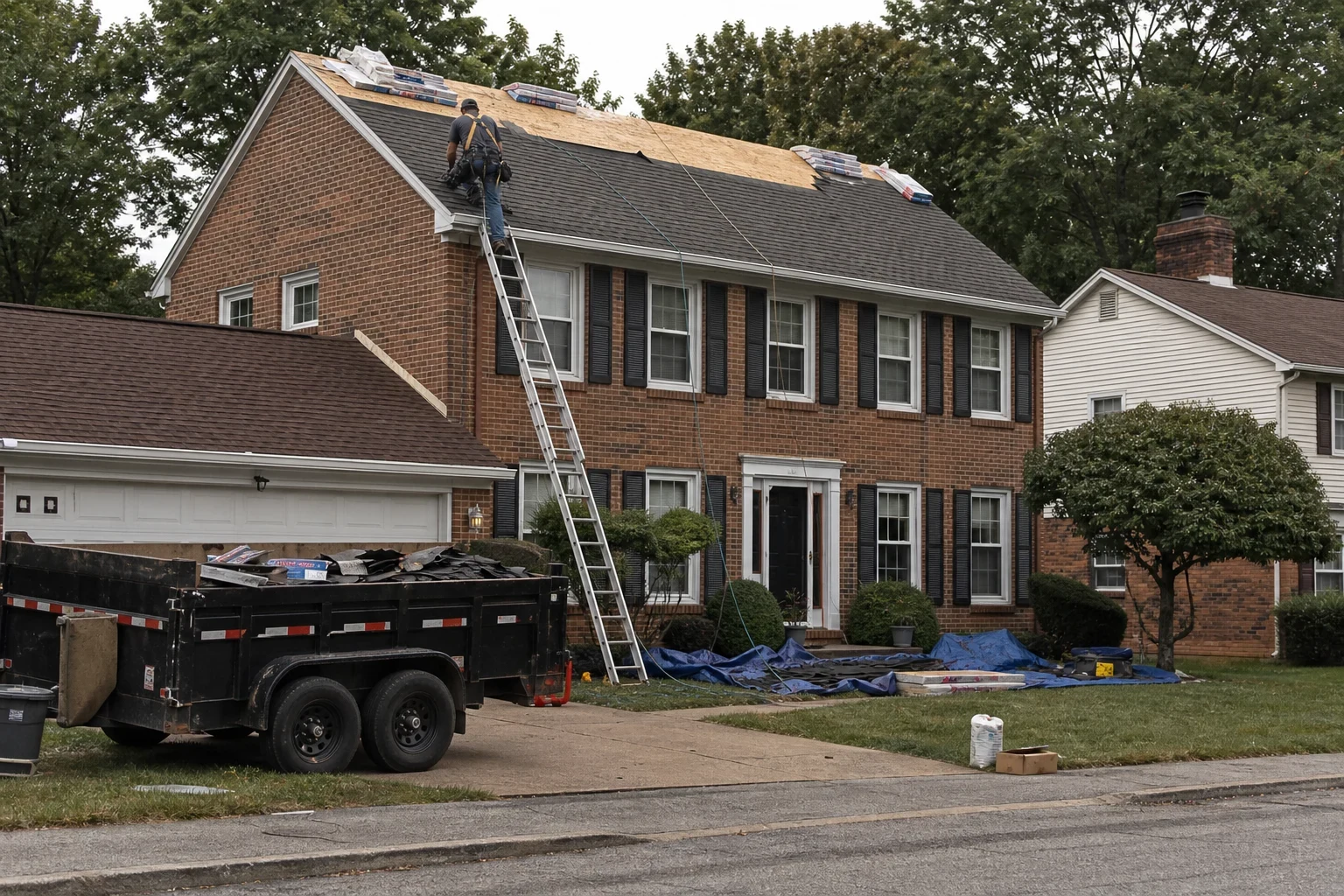
When replacement is the right call
Asphalt shingles wear out slowly. The granules thin, the mat dries and cracks, and the seal strips stop gripping. Once a roof reaches that stage, patching one spot just moves the leak to the next weak spot. If your roof has needed repair after repair, replacing it usually costs less over the coming years than chasing leaks.
We'll tell you honestly if a roof repair would still do the job, and if it would, that's what we recommend. If it won't, we show you photos of what we found so you can decide with the facts in front of you.
Northern Kentucky winters swing above and below freezing week to week, which is hard on tired shingles and on the eaves where ice builds up. A replacement is your chance to fix those weak points instead of copying them onto a new roof.
What your new roof includes
Old shingles come off completely
Every existing layer is stripped away instead of being covered up. With the deck bare, we can check each sheet of wood, and your rafters aren't left carrying the weight of two roofs.
Decking repair where needed
Soft, delaminated or rotted plywood gets cut out and replaced. We photograph it and tell you before adding it to the job, so it never shows up as a surprise on the bill.
Ice and water shield at the edges
A self-sealing membrane goes along the eaves, in the valleys and around pipes and chimneys. Those are the places where ice dams and blowing rain force water back under shingles. The open field of the deck gets a synthetic underlayment.
New flashing and pipe boots
Step flashing, chimney flashing and rubber pipe boots are replaced, not reused. These joints are where most leaks begin, so they get new metal and careful sealing.
Balanced attic ventilation
We check intake at the soffits and exhaust at the ridge, then balance the two. An attic that breathes properly runs cooler in summer and collects less frost in winter, which helps the new shingles last.
Yard protection and cleanup
Tarps cover your landscaping, debris goes straight into a dumpster, and we run a magnet over the lawn and driveway to pick up loose nails.
Signs your roof is ready to be replaced
Curling or cupped shingles
Edges that lift or centers that sink mean the shingles have dried out. Wind gets under them easily, and they can't be flattened back down.
Grit collecting in your gutters
Some loose granules are normal right after a new roof goes on. Heavy buildup from an older roof means the shingles are shedding their coating, leaving bare asphalt to bake and crack.
Water marks in more than one room
One drip from one spot is often a repair job. Stains appearing on ceilings across your home usually point to a roof that's failing in many places at the same time.
Dips in the roofline
A sag you can see from the street often means the decking has gone soft from long-term moisture. That needs attention before it spreads.
Damp or daylight in the attic
Wet insulation, dark streaks on the rafters or pinpoints of light through the boards tell you water and air are getting through.
Age plus a history of patches
An older roof that has already been patched several times is usually telling you it's done. A roof inspection can confirm it.
How a roof replacement goes
- 1
Free inspection and estimate
We walk the roof, look in the attic and measure everything. You get a written, line-item estimate with your shingle options and an honest answer on whether replacement is really needed.
- 2
Permit and a start date
If your city asks for a permit on a reroof, we file for it and handle the paperwork. Then we settle on a start date with the forecast in mind, since shingles seal best in dry, mild weather.
- 3
Tear-off and dry-in
We strip only as much roof as we can cover with underlayment the same day. Your home isn't left open to the weather overnight.
- 4
Installation
Ice and water shield, underlayment, drip edge, flashing, shingles and ridge vent go on in order. We check nailing and flashing details as we go, not just at the end.
- 5
Walk-through and cleanup
Once any required inspection is done, we walk the finished roof with you, share photos of the work and leave the yard clean.
What sets the price of a new roof
Every roof is priced on its own measurements and condition, so we don't guess at numbers over the phone. Your written estimate breaks the job into line items, so nothing is lumped together or left vague. These are the things that move the total most.
- Roof area and steepness
- A bigger roof takes more shingles, more underlayment and more hours. Steeper pitches slow the crew down and call for harnesses and roof jacks.
- Layers coming off
- A roof with two old layers takes more time to tear off and more dumpster space to haul away.
- Condition of the decking
- Sound plywood costs nothing extra. Rotted sections are replaced by the sheet, and we show you each one before it's added.
- Shingle choice and details
- Architectural shingles, chimneys, skylights, valleys and dormers all change the material list and the hours needed to flash everything correctly.
- Permits and timing
- Permit fees vary by city. Scheduling in spring or fall, when the weather cooperates, can also make the job run smoother.
Roof replacement questions we hear often
Something not covered here? (859) 695-2033
How many days does a new roof usually take?
For a typical house, the crew is on the roof for one to three working days. A steep pitch, a large footprint or a lot of rotted decking adds time. Your estimate includes a realistic schedule, and we'll let you know if rain pushes anything back.
Can you just put new shingles over my old ones?
We don't recommend it. Covering an old layer hides the decking, adds weight and can shorten the life of the new shingles. A full tear-off lets us fix problems underneath instead of sealing them in.
Do I need to be home while you work?
No, you don't have to stay put all day. The two times we'd like you there are a quick chat when the crew arrives and the walk-through at the end. Moving cars out of the driveway and taking fragile pictures off the walls helps, since hammering on the roof can shake things loose inside.
Will my homeowners insurance pay for a new roof?
It depends on the cause. Wind or hail damage is often covered, while normal wear usually isn't. We can document what we find with photos and explain what we see, but your adjuster makes the coverage decision. If a storm caused it, our Storm Damage Repair page explains how that process works.
What's the best time of year to replace a roof?
Spring and fall are ideal because shingles seal best in mild, dry weather. Summer works well too. We can work on mild winter days, but we won't install when it's too cold for the shingles to bond.
Should I replace my gutters at the same time?
If your gutters are sagging, leaking or pulling away, doing them with the roof saves a second setup and lets the drip edge and gutters fit together properly. If they're in good shape, we work around them. Our Gutters page has more detail.
Let's find out what your roof really needs
We'll come out, look at your roof and attic, and give you a free written estimate with photos. If a repair will do, we'll tell you that too.