ServicesRoof Repair
Roof Repair in Crestview Hills, Fixed Where the Water Starts
A stain on the ceiling rarely sits right under the hole. We trace the leak back to where water actually gets in, show you what we found, and fix it properly so you are not calling us again after the next hard rain.
When fixing beats replacing
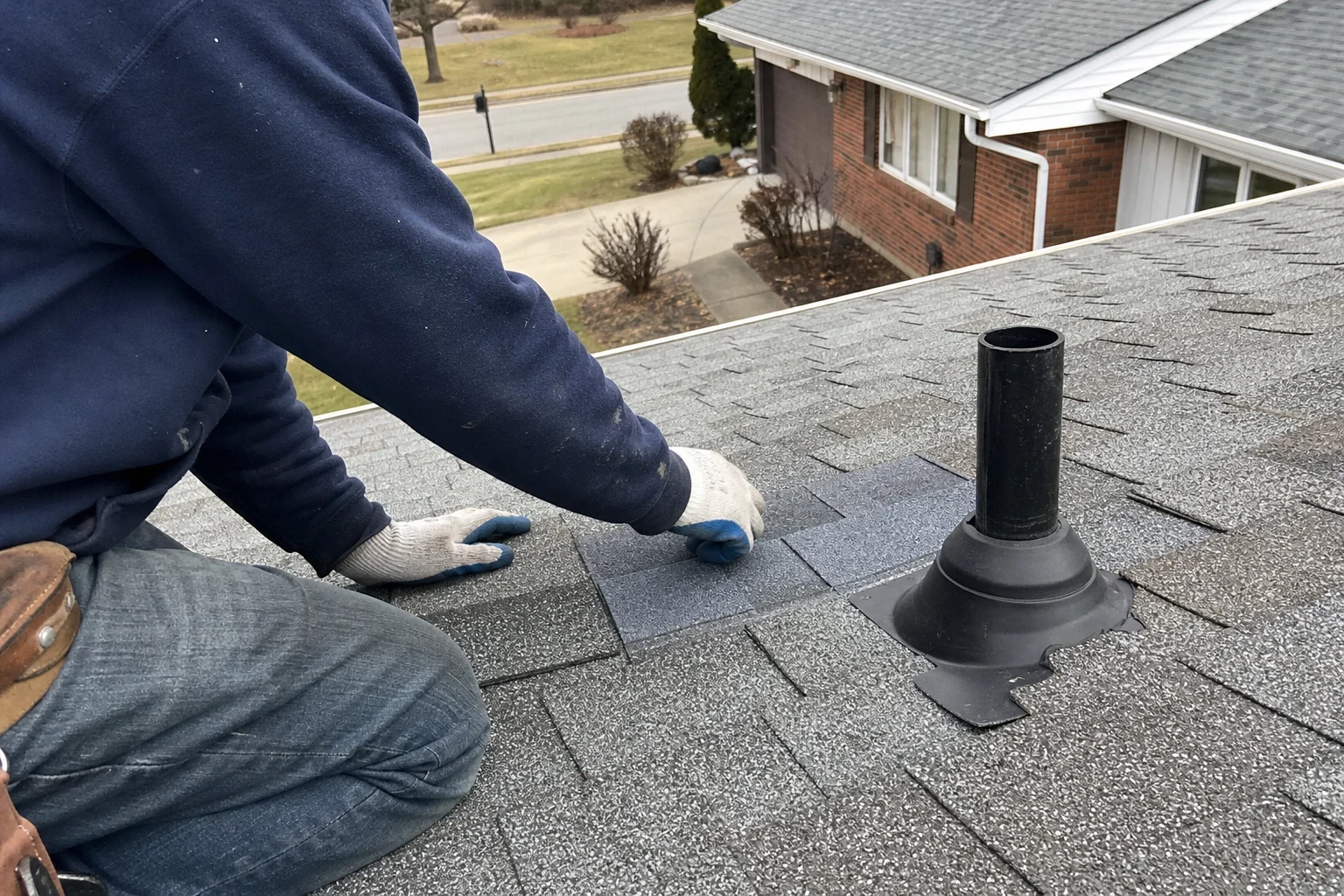
A leaking roof usually has one weak point, not a worn-out surface. A split rubber collar on a plumbing vent, a handful of shingles a gust peeled back, or chimney flashing that has pulled loose can all put water in your home while the shingles around them are still sound. Repairing that one spot is normally the practical, budget-friendly choice.
Northern Kentucky winters make small openings bigger. Water works under a lifted tab, freezes overnight, expands and pries the gap a little wider with each cycle. Getting to it early keeps the job to a patch instead of a section of rotted decking.
If we climb up and find the shingles tired across the whole roof, we will say so plainly. Sometimes roof replacement costs less over the years than chasing a new leak every spring, and you should hear that before you spend a dollar.
What our roof repair covers
Leak tracing
We follow the water from the stain in your ceiling or attic up to the point where it enters. That often means checking the attic side for wet sheathing and nail tips before we ever touch a shingle.
Shingle replacement
Missing, cracked or curled shingles are removed and replaced, and we match color and profile as closely as current products allow. New shingles are nailed into solid wood, not into the old holes.
Flashing and boot repair
The leaks we chase most often begin at a chimney, skylight, sidewall or vent pipe. We rebuild step flashing and counterflashing and swap out cracked pipe boots instead of covering the gap with caulk.
Soft decking
Plywood that has soaked up water turns soft and loses its grip on nails. We remove the weakened piece and fasten fresh sheathing in its place before rebuilding the roof over it. Shingles nailed into rotted wood will not stay put.
Valley and edge work
Valleys carry more water than any other part of the roof, and edges take the brunt of ice buildup. We repair worn valley lining and drip edge so water runs into your gutters, not behind the fascia.
When your roof is asking for a fix
- Water marks inside
- A tan or brown ring on a ceiling or upper wall, especially one that grows after a heavy rain or a thaw, means water is slipping past the roof. Finding it early keeps the indoor repair small.
- Shingle pieces on the grass
- Torn bits of shingle scattered across your lawn after strong wind tell you part of the roof is now uncovered. A single missing tab is enough to let rain reach the underlayment.
- Damp attic or musty smell
- Wet insulation, dark streaks on rafters or a mildew smell in the attic often show up before any stain appears below.
- Granules in the gutters
- A little grit is normal on a newer roof. Heavy piles at the downspouts, or shingles that look bald in patches, mean the surface is wearing through.
- Sagging or soft spots
- A dip along the roofline, or a spot that feels spongy underfoot, usually points to moisture in the decking. Keep off it and have it looked at.
How a repair visit works
- 1
Start with a phone call
Describe the drip, stain or damage and roughly where in your home it shows up. We pick a time to visit and put together your free estimate.
- 2
Look before we price
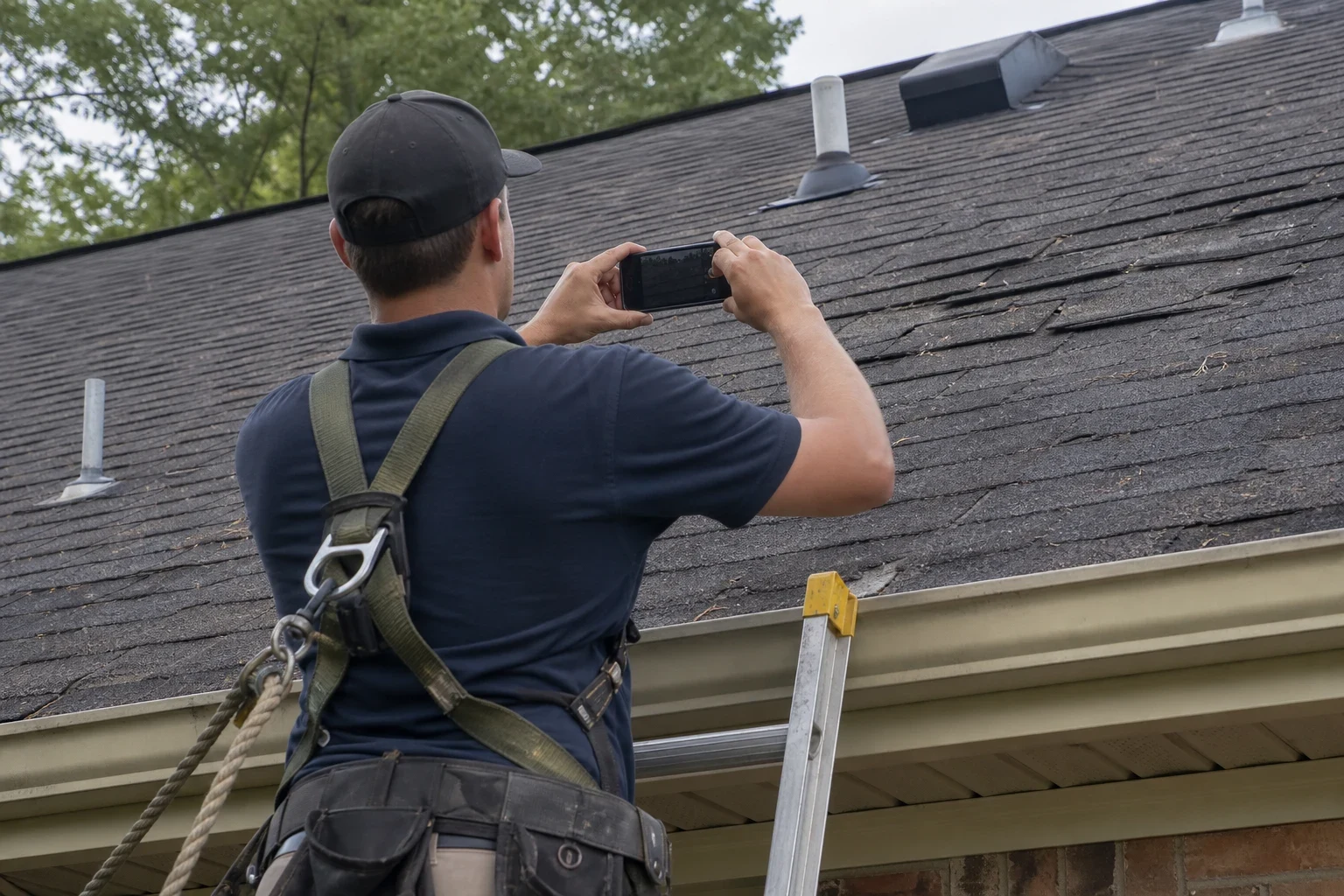
We go up on the roof and into the attic, photograph the trouble spots and sit down with you to go over the pictures. You hear what caused the problem and what the fix involves, and then the price.
- 3
Do the repair
Once you say go, we protect your landscaping and siding, tear off only what needs to come off and rebuild that area with proper underlayment, flashing and nailing. Most repairs are finished in a single visit.
- 4
Clean up and show you
We pick up old shingles, sweep for nails with a magnet and show you photos of the finished work. If a repair needs a permit, we handle that paperwork for you.
What affects the cost of a roof repair
We put a price on a repair only after we have been on the roof and in the attic, since what shows from the ground rarely tells the whole story. You hear the number before work starts, along with what it covers. If opening the area turns up something we did not expect, we pause and talk it over with you first.
- What is underneath
- A simple shingle swap costs far less than one where the decking below has rotted. We cannot always know until the damaged area is opened up.
- Where the problem is
- Leaks around chimneys, skylights and valleys take more time than a bare spot in the middle of a slope, since flashing has to be rebuilt carefully.
- Pitch and height
- A steep roof or a two-story home needs extra safety setup and slower work, which adds labor time.
- Matching materials
- Older or discontinued shingles can be harder to match. We will show you the closest options and what each one costs.
Roof repair questions we hear most
- Is a patch enough, or am I looking at a new roof?
- Usually a focused repair does the job. Replacement only comes up when the shingles are worn out across the roof or the same spots keep failing. Either way, our photos let you see the reason for yourself.
- Will new shingles stand out against my old ones?
- Our goal is a close match in color and shape, using what manufacturers make today. On many roofs, a slight difference softens after a season of sun and rain. If your roof has a style that has been discontinued, you will hear that before work begins, along with the nearest options we can find.
- Can you repair a roof in winter?
- Yes, on dry days above freezing we can usually complete most repairs. Shingles seal best in warmer weather, so in the cold we hand-seal the tabs to hold them down until spring warms them up.
- Is the leak from my roof or my gutters?
- It can be either. Clogged or pulled-away gutters push water behind the fascia and into walls, which looks a lot like a roof leak from inside. We check both, and our gutters service can handle that side if it turns out to be the cause.
- My leak started after a storm. Should I call my insurance first?
- It helps to have us look first so you know what you are dealing with. We will document the damage with photos you can share with your adjuster. For larger wind or hail damage, see our storm damage repair page.
Let us find that leak before it spreads
Give us a ring with what you have noticed, and we will visit, pin down the cause and price the fix. Ask about our Limited Time — $50 Off Your First Service Call.