ServicesRoof Inspections
Roof Inspections in Crestview Hills
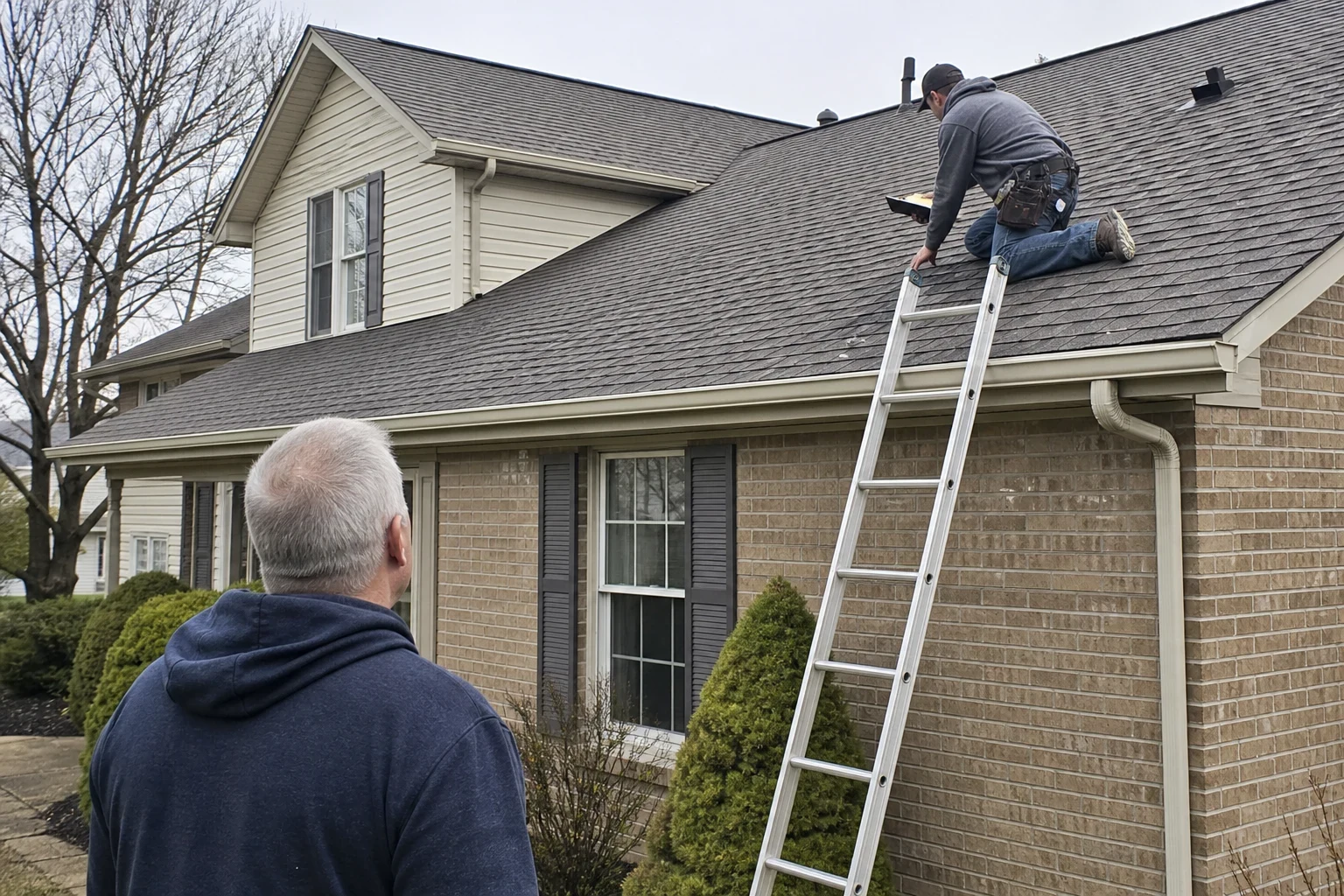
Not sure what shape your roof is in? We get up there and check the shingles, flashing, vents and gutters, then sit down with you and go through photos of what we found. You get a clear answer on what needs attention now and what can safely wait.
A Clear Picture of Your Roof Before Small Problems Grow
Most roof trouble starts small. A lifted shingle, a cracked rubber boot around a vent pipe, or a gap in the flashing where the roof meets a wall can let water seep in for months before you notice anything indoors. Spotting those early usually means a quick repair instead of rotted wood and soggy insulation.
Our winters swing above and below freezing again and again, and that cycle is hard on roofs. Water gets into small openings, freezes, expands and pries them a little wider each time. We know where that damage tends to show up and we look there first.
An inspection also makes sense before you buy or sell a house, after a hard storm, or once your roof has some years on it and you'd like to budget for the next step on your own timeline.
What We Check on Every Roof Inspection
- Shingles and roof surface
- We look for cracked, curling or missing shingles and for bald spots where the granules have worn away. Granule loss tells us a lot about how much life the roof has left.
- Flashing and roof penetrations
- Chimneys, skylights, vent pipes and the spots where a roof butts against a wall are the usual ways water sneaks in. We look over the metal flashing, the sealant and the rubber pipe boots for rust, cracks and separation.
- Attic ventilation and signs of moisture
- When we can get into the attic, we look at the underside of the roof deck for dark staining, damp insulation or frost buildup. Poor airflow shortens shingle life and can lead to ice dams along the eaves.
- Gutters and drainage
- We check that gutters are attached firmly, sloped correctly and draining away from your home. Overflowing gutters can rot the fascia and send water behind the roof edge.
- Decking and roof edges
- Soft or sagging spots underfoot can point to rotted decking. We also check the drip edge and fascia boards where water runs off.
- Photos and a plain-language walkthrough
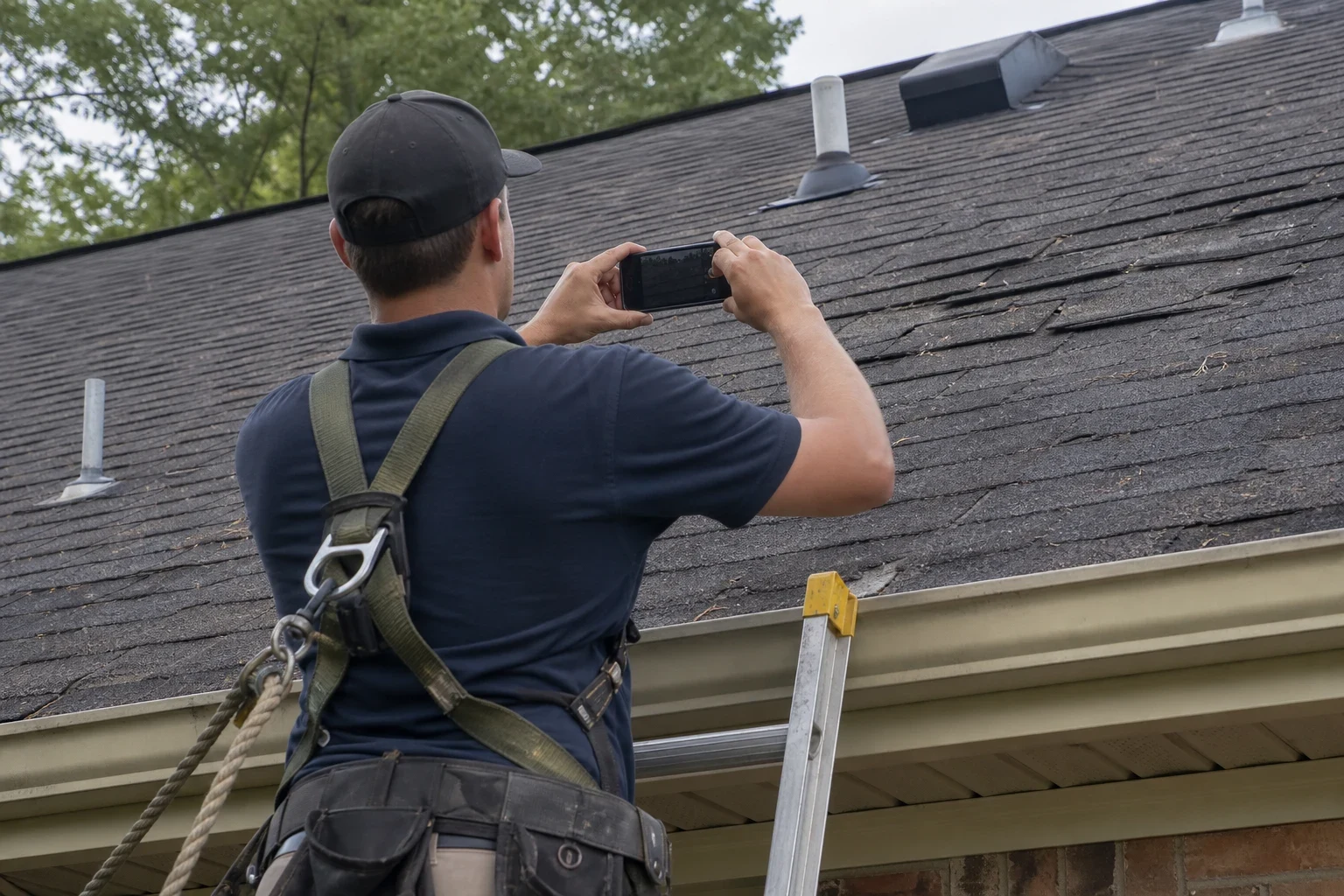
- Every finding comes with a photo. We go over them with you, explain what each one means and tell you honestly whether it needs a repair, a watchful eye or nothing at all.
Signs It's Time to Have Your Roof Inspected
Water marks on ceilings or walls
A yellowish or brown patch, even a small one, tells us water is getting past the roof. The real entry point often sits several feet uphill from the mark, so tracing it takes a careful look.
Granules collecting in the gutters
Gritty, sand-like material in your gutters or at the bottom of downspouts means your shingles are shedding their protective coating.
A recent hail or wind storm
Spring thunderstorms can bruise shingles or lift tabs without leaving anything obvious from the ground. A quick check now can save trouble later.
Icicles or ice dams in winter
Heavy ice along the eaves often points to trapped attic heat or poor ventilation, and it can push meltwater back under the shingles.
Your roof is 15 years or older
Asphalt shingles start to show their age around this point. An inspection helps you budget for what is coming rather than reacting to a leak.
You're buying or selling a house
Knowing the roof's real condition gives you solid footing in negotiations and avoids surprises after closing.
What Affects the Cost of Follow-Up Work
The inspection itself is free. If we find something that needs attention, the price of the repair depends on what is wrong and how hard it is to reach. We explain every line before any work is scheduled, and nothing happens without your go-ahead.
Roof slope and height
Steep slopes and tall rooflines call for safety harnesses and careful footing, so the crew moves slower and the labor adds up.
Size of the problem
Resealing one vent boot is a small job. Replacing flashing around a chimney or a whole section of shingles takes more material and time.
What's under the shingles
If water has soaked into the decking, the soft wood has to be cut out and replaced before new shingles go down.
Matching existing materials
Older shingle styles can be hard to match. We'll tell you how close a match we can get before you decide.
How Your Roof Inspection Goes
- 1
A quick call to set a time
You tell us what you have noticed and any history you know about the roof. We set a time that works for you, and you don't need to be on the roof or in the attic with us.
- 2
The outside check
We walk the yard first to look at the roof lines, gutters and siding edges, then go up on the roof if it is safe to walk. We take photos as we go.
- 3
The attic check
If you're comfortable with it, we take a look in the attic for moisture, daylight through the decking and ventilation problems. This often tells us more than the roof surface alone.
- 4
We go over what we found
We sit down with you, show you the photos and explain each finding in everyday words. If something needs work, you get a free estimate and an honest opinion on whether roof repair makes sense or whether roof replacement is the better long-term choice.
Roof Inspection Questions
Is the roof inspection really free?
Yes. We come out, check your roof and walk you through what we found at no cost. If you decide to have work done, you'll get a free estimate first, and you're never obligated to move forward.
How long does the inspection take?
On an average-sized house, most visits wrap up in about an hour. A large roof with lots of valleys and dormers, or a trip through the attic, adds some time. We'll give you a rough idea when we put the visit on the calendar.
Will you try to sell me a new roof?
No. Many roofs only need a small repair, and we'll tell you when that's the case. If replacement is the smarter choice, we'll show you the photos that explain why and let you decide.
How often should I have my roof inspected?
Once a year is a good habit, ideally in spring after the freeze-thaw season or in fall before winter sets in. It's also worth a check after any storm with hail or strong winds.
Can you help if I think I have storm damage?
Yes. We'll document what we find with clear photos so you understand the damage before deciding whether to contact your insurance company. Our storm damage repair page explains more about how we handle that work.
Find Out Where Your Roof Stands
A short visit and a set of photos can answer a lot of questions about your roof. Ask about our Limited Time — $50 Off Your First Service Call if any repairs turn up.